


Discover The Practice Of COPYTYPING
"He wanted to know what it felt like to write a masterpiece."
-Johnny Depp, reflecting on Hunter S. Thompson's practice of copytyping
Copying others' work can feel like cheating or laziness, but in the 18th and 19th centuries, there was a common practice called COPYWORK for learning and developing good writing skills. These days, AI can do much of the writing for those who choose to do so, but unlike copywork, it cheats us of the blessing of challenging our brains or the pleasure of seeing our own words on paper. You might say that copywork does the same, as it seems to be a mindless task of copying the work of another. However, it's quite the opposite.
Just as a baby learns to speak and walk by imitating its parents, or as an apprentice develops a skill through the imitation of a master, so, too, copywork—or copytyping—puts us in the place of sitting at the feet of those who are accomplished and proficient in writing.
Imitation isn't just the sincerest form of flattery; it's the sincerest form of learning.
-George Bernard Shaw
Beyond Flattery
Copywork is the practice of slow, deliberate handwriting of the work of another person. Copytyping is the same idea, but using your typewriter instead of a pen. It is quite relaxing, yet it also trains our brains to recognize structure and grammar, learn new words, and recognize the patterns and flow of writers who are further along in their journey. In other words, we're learning to walk, talk, even dance, better with words.
Far from parroting or adopting another's voice, diligent use of copytyping actually helps us develop our own personality while improving our competence. Austin Kleon, author of Steal Like An Artist, says, "Imitation is about copying. Emulation is when imitation goes one step further, breaking into your own thing."
The Benefits of Copytyping
Prior to discovering copytyping was a real practice, I stumbled upon it, unknowingly, while looking for a way to do two things: find time to use my typewriters and relax. My typewriters were collecting dust because I dreaded the idea of having to come up with something clever to write when I sat down and laid my fingers on the keys. This was intimidating to me most of the time. I rarely felt clever or inspired and would stare at the paper, wondering where to begin. That's when I grabbed a book and began to type as I read.
The biggest surprise was how much I enjoyed it and how I instantly relaxed. Not only was I reading (and I seemed to never have time to read for fun), but I was getting time on my typewriter—and that made me so happy! Intuitively, I called it "copytyping," but quickly learned it was a real thing, used by writers to become better writers.
As I did a little research, pondered the work of scribes in ancient times, and reflected on the benefits I was personally receiving from this practice, I realized it was far more important than I had initially thought. Copytyping has very real and tangible benefits, such as:
Increases writing skill.
Expands vocabulary.
Improves grammar.
We are absorbing and learning from the masters of the craft.
Relaxing/reduces stress. (It's perfect for decompressing!)
Improves memory and focus.
Can be spiritually meditative.
Forces you to slow down/write at a thoughtful pace.
Improves typing form, skill, and pace.
Helps you become familiar with the flow (personality) of your typewriter.
Get to read more books and poetry!
Begin to uncover your style and voice through the exploration of others' works.
Gives you time on the typewriter without having a purpose other than typing.
Can help with mental or creative blocks.
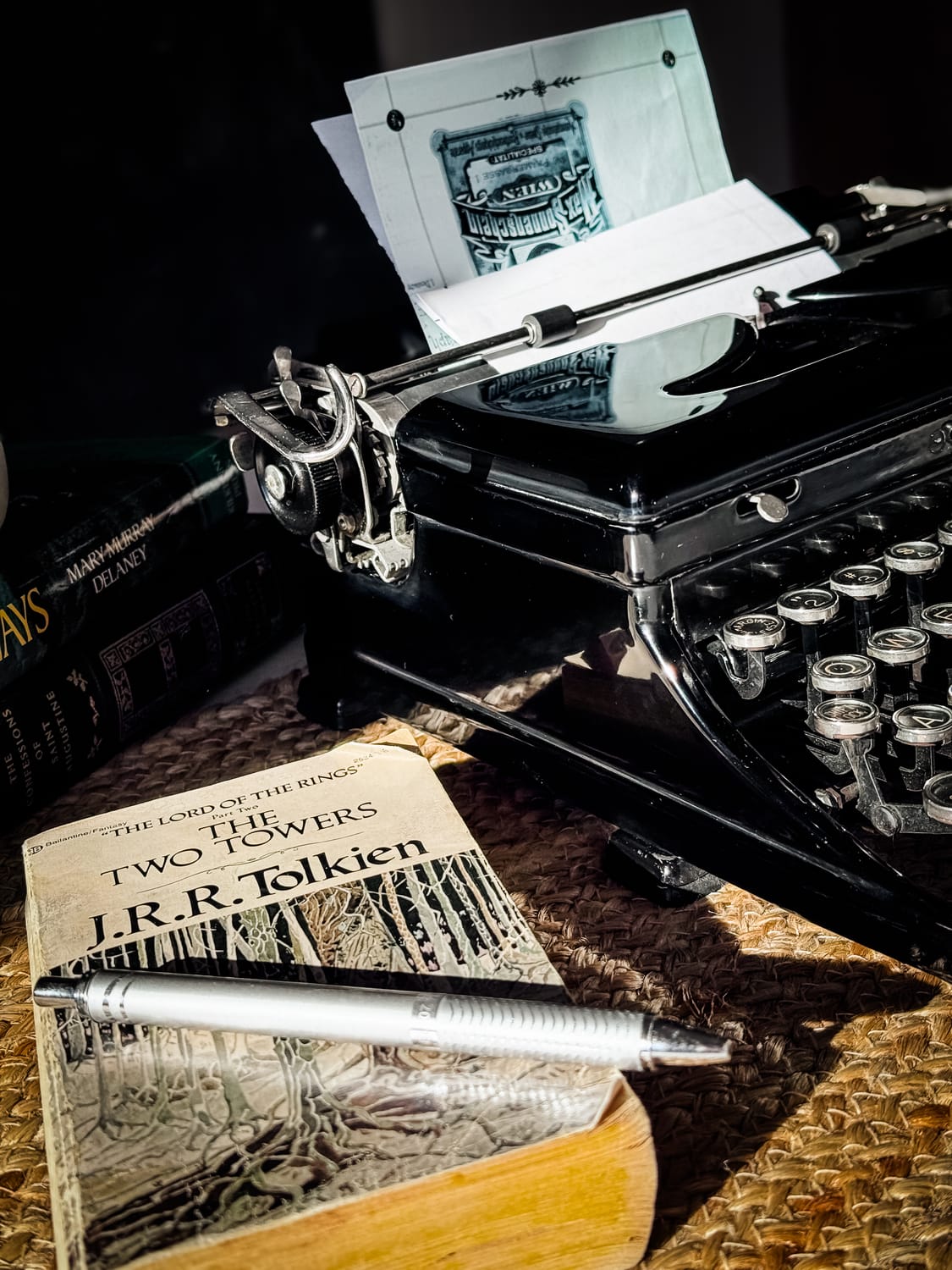
Find a writer you enjoy and apply yourself to copy their work on your typewriter.
Tips To Get Started Copytyping
Setting is everything.
To get the most out of copytyping, preparation is essential. Here is what I do to make the most of my time copytyping and where I resource content to use:
Plan to type when the house is quiet (I prefer to do mine in the evenings or early morning).
Create an inviting atmosphere (I like to type by candlelight or early morning sunlight).
Turn off distractions. If listening to music, keep it soft and instrumental, or use nature ambience.
Give yourself time to copytype. Take deep breaths.
Start small. Pick poetry or a short chapter of a book. Work your way up to larger works and longer periods of time on the typewriter.
Your fingers may need time to adjust to typing for long stretches.
To start, choose authors that you enjoy reading or who reflect a style you enjoy or wish to emulate.
Expand your copytyping experience to those who challenge you and will sharpen your skills.
If increasing your skill as a writer is important to you, be intentional about your source selections.
For free books online, visit www.openlibrary.org and Internet Archive.
Even if your goal isn't to become a better writer, the practice of copytyping is relaxing for body, mind, and soul. As you read and type, you absorb what you're reading better, and it gives your brain a break from the noise and clatter of the world outside. If anything, it gives you time on your typewriter without having to come up with fresh writing ideas. Sometimes, it's nice to type without any purpose other than enjoying the moment.
Whatever your reason, I hope you give copytyping a try and see if it doesn't improve your mood, relax your mind, clear your thinking, and give you an opportunity to sneak in extra moments of reading—all while learning to be a better, more proficient writer.


I include links to recommended books in my blogs. As an Amazon Associate I earn from qualifying purchases.
Professionally serviced vintage typewriters since 2018.
Copyright 2018-2026 Living Free Enterprises, LLC
Created with systeme.io